Thermal process
Material grade, heated area, tool shape, heating zones, dwell/cooling time, forming and pull-out criteria.
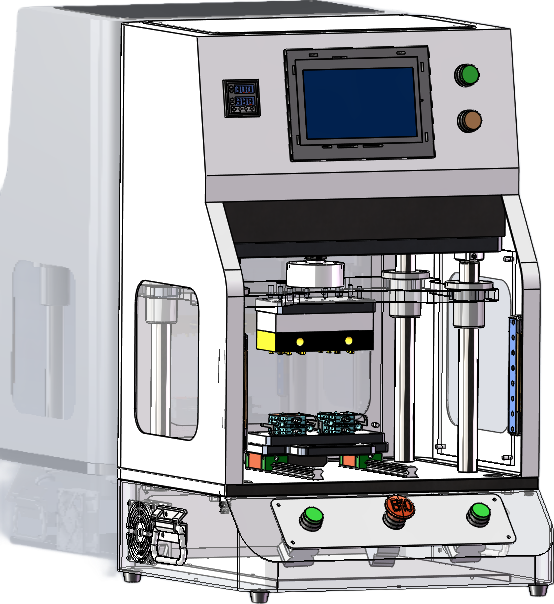
Catalogue image · Configuration subject to proposal
A four-column, three-platen structure with force/position feedback, PID heating and non-stick tooling for multi-point plastic heat staking and bonding.
This page introduces the product family. Final specifications, features and scope are defined in the agreed technical proposal.
Four guide columns connect the fixed upper platen, moving hot platen and worktable for multi-point staking and fixture layouts. The cycle follows rapid approach, slow contact, force dwell, cooling delay and return. Validate the material, stake geometry and heat head using actual parts.
The document identifies ABS, PC, glass-fibre reinforced PA and PP heat staking, plus electronic component bonding. Touchscreen curves, multiple recipes, USB production-data export and alarms support process management as configured.
Listed protective features include two-hand start, a transparent guard, emergency stop and software/mechanical limits. Confirm interlocking, risk assessment and acceptance in the project proposal.
Figures are from pages 5–8 of the supplied benchtop hot press introduction and apply to that documented configuration, not all hot presses. The image is a design illustration. Force, stroke, table dimensions and power supply require project confirmation.
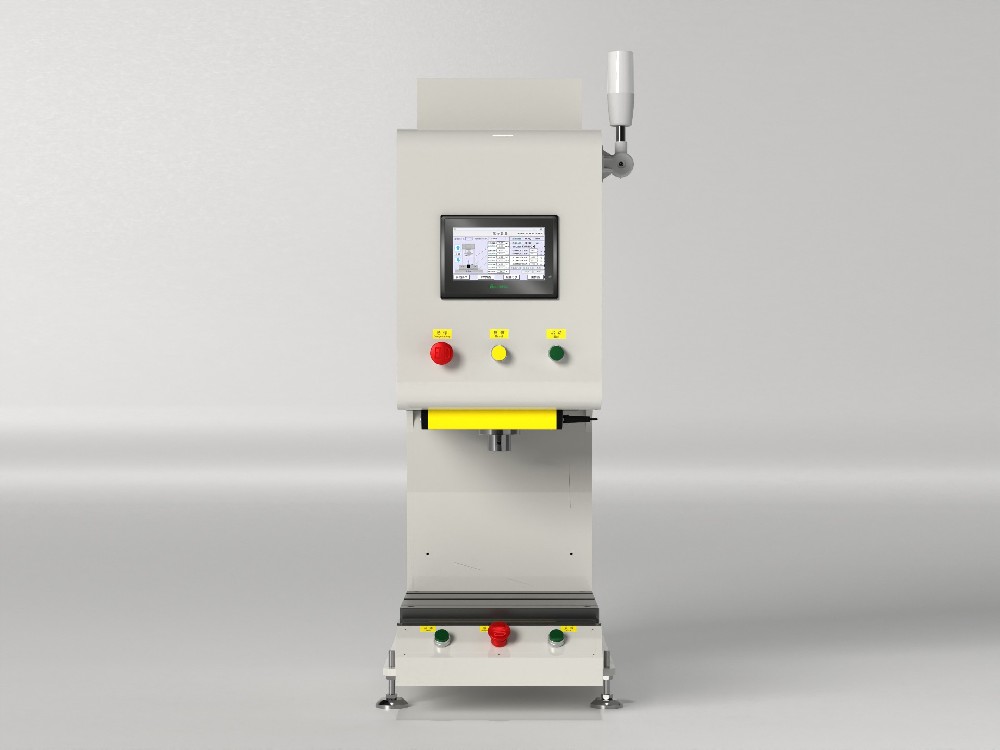
View full image ⤢The design illustration shows four-column guidance, the heated work area and a transparent guard. The product introduction specifies a Type K thermocouple, PID control and a PTFE non-stick surface. Validate head shape, support, heated area and release with actual stakes or bonded parts.
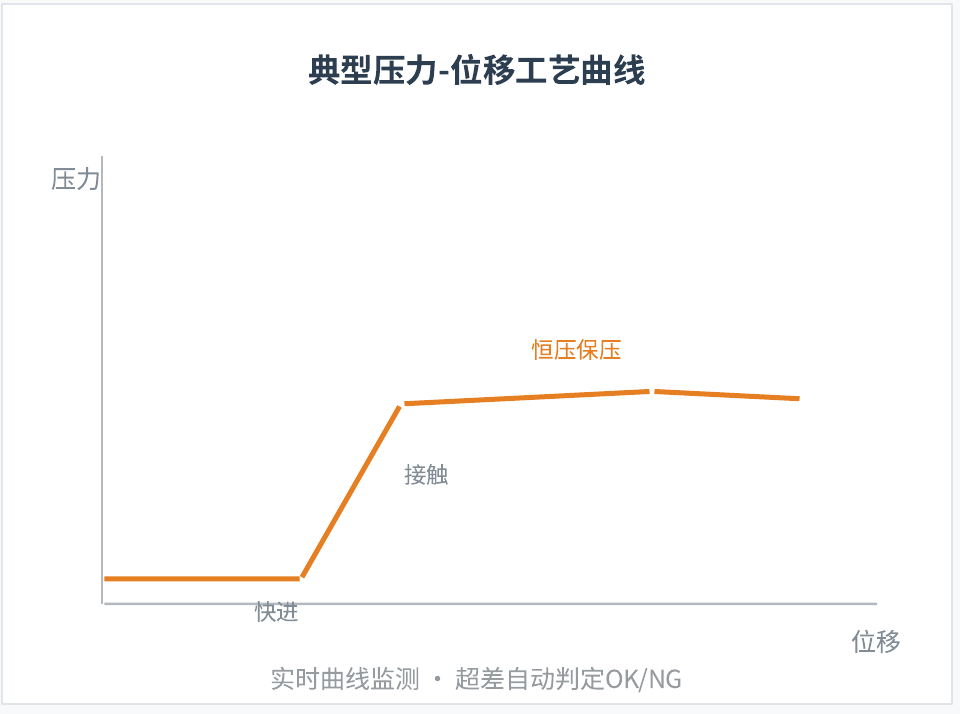
Illustrative sequence; validate targets, speed, time and evaluation criteria for the part.
 View full image ⤢
The source curve illustrates pressure variation through the process. It is not a production measurement or a force, stroke or accuracy specification. Assess actual trials using position, temperature, dwell and cooling records together.
Image source:Benchtop hot-press introduction · p.7| Item | General brochure configuration | Benchtop four-column introduction |
|---|---|---|
| Temperature range | 0–300°C | 50–350°C |
| Control specification | ±1°C | ≤±2°C |
| Source | Zhongcheng brochure p.8 | Benchtop hot-press introduction p.6 |
Figures belong to separate configuration documents. Control specifications do not establish platen temperature uniformity; confirm force, stroke, table, heating zones and final configuration separately.
Material grade, heated area, tool shape, heating zones, dwell/cooling time, forming and pull-out criteria.
Force, working stroke, daylight, table and eccentric loads; check tooling and loading clearance together.
Good and defective samples, evaluation rules, result or full-curve retention, barcodes and interfaces.
Evaluate temperature, force, displacement and time as one process.
Read the guide ↗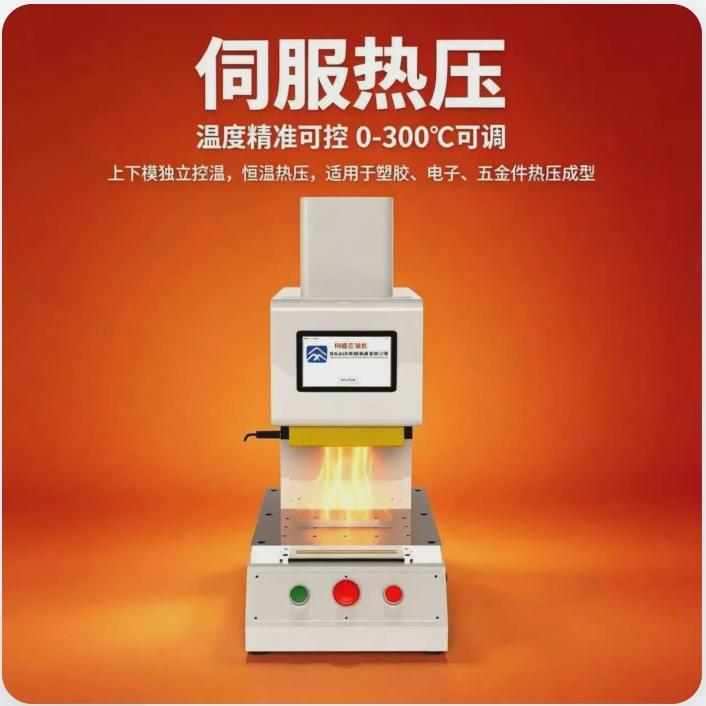 ↗
Combines servo force and temperature control for validated plastic heat staking, bonding and hot pressing processes.
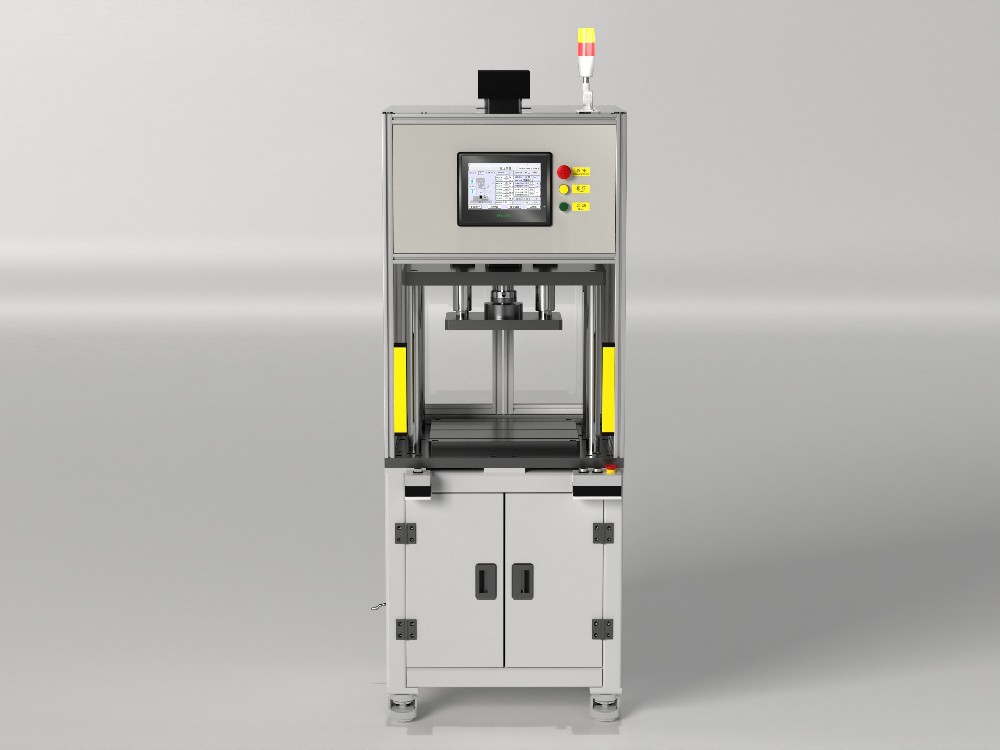 ↗
A four-column guided platform for press fitting, forming and fixture integration.
 ↗
Open access for loading and tooling adjustments in stand-alone assembly stations.
Tell us about your part, process and cycle requirements. Start with an engineering conversation.