Part & assembly
Part drawings, materials and interference; identify support, loading surfaces and final seating requirements.
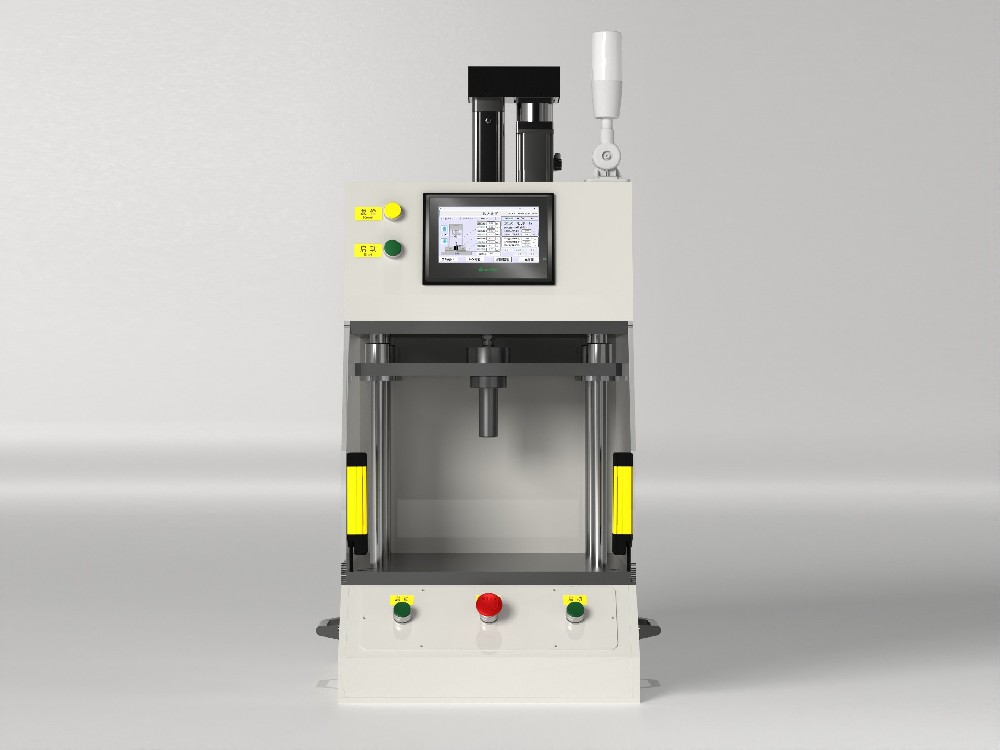
Catalogue image · Configuration subject to proposal
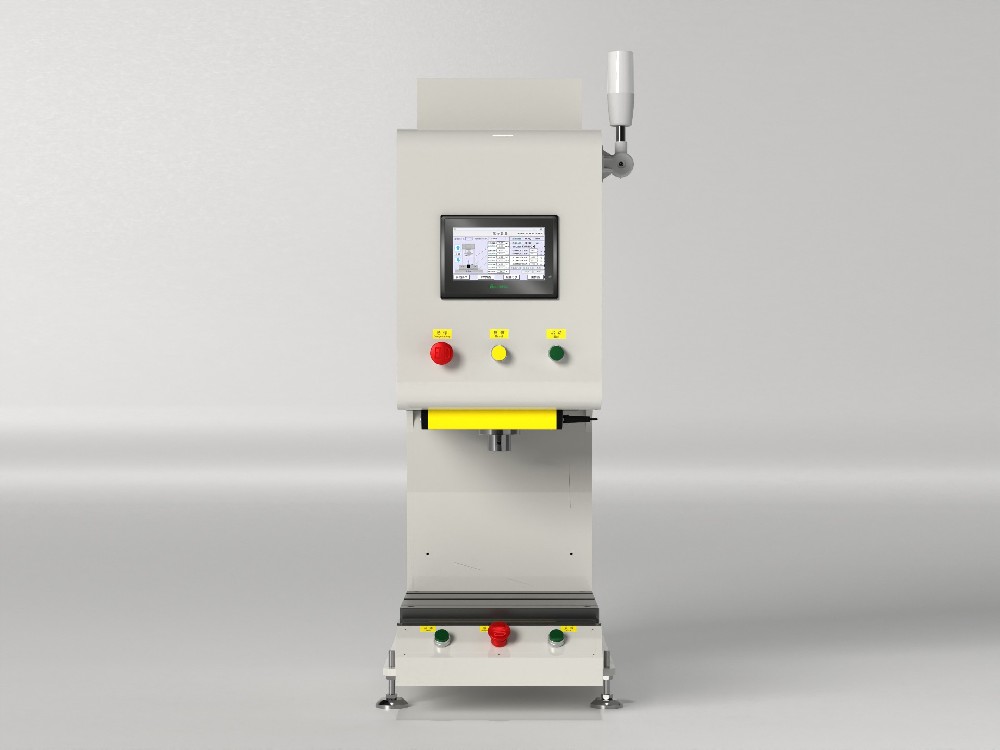
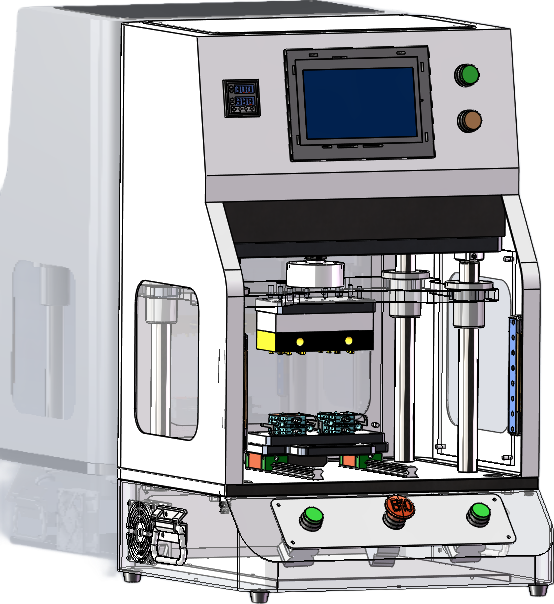
A compact benchtop layout for small-part assembly and process trials with dedicated fixtures.
This page introduces the product family. Final specifications, features and scope are defined in the agreed technical proposal.
For compact assembly stations, small-part pressing and trials with customer parts. Check bench load capacity, working stroke, tool height and loading clearance as well as the footprint.
Define approach, working feed, endpoint and return steps around the workpiece; recipe management can support batch changes. For multi-point heat staking or heated pressing, see the dedicated four-column benchtop hot press. Heating is not implied for the standard benchtop press.
View full image ⤢A benchtop layout supports a dedicated station around smaller parts. Beyond footprint, confirm bench load capacity, working height, tool-change clearance and safeguarding coverage. A compact frame still requires proper part support and process validation.
Illustrative sequence; validate targets, speed, time and evaluation criteria for the part.
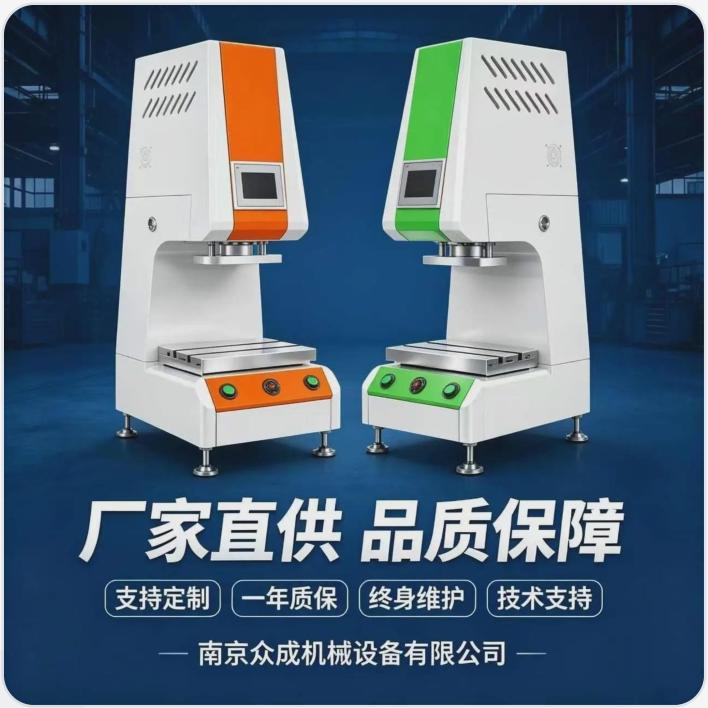 View full image ⤢
This Zhongcheng brochure image shows another C-frame benchtop arrangement. Use its appearance, panel and tooling layout for project discussion; final specifications, configuration and service terms follow the agreed contract.
Image source:Zhongcheng 2026 brochure · p.7 · original image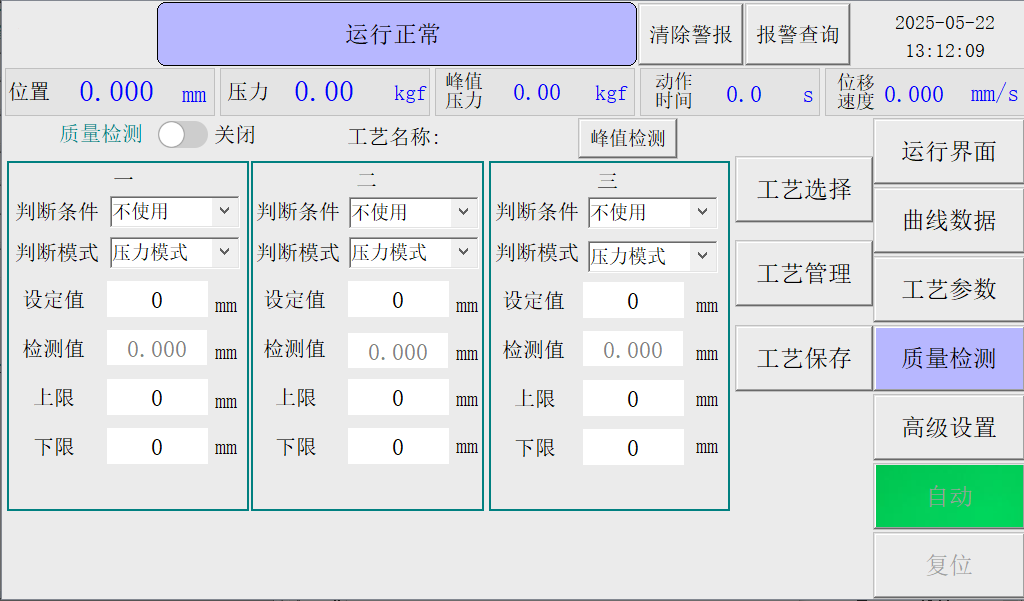 View full image ⤢
The integrated-controller manual describes three configurable checks and an independent region peak; any failed check gives NG. Do not combine these checks with PC multi-point regions or envelopes as one standard feature set.
Original Chinese interface retained; the explanation below describes its purpose.
Third-party reference · Image source:YZJ-Z107 manual · software V8.1.1 · p.14Part drawings, materials and interference; identify support, loading surfaces and final seating requirements.
Force, working stroke, daylight, table and eccentric loads; check tooling and loading clearance together.
Good and defective samples, evaluation rules, result or full-curve retention, barcodes and interfaces.
Specify control modes, force–position curves, OK/NG evaluation and traceability for your selected controller.
Read the guide ↗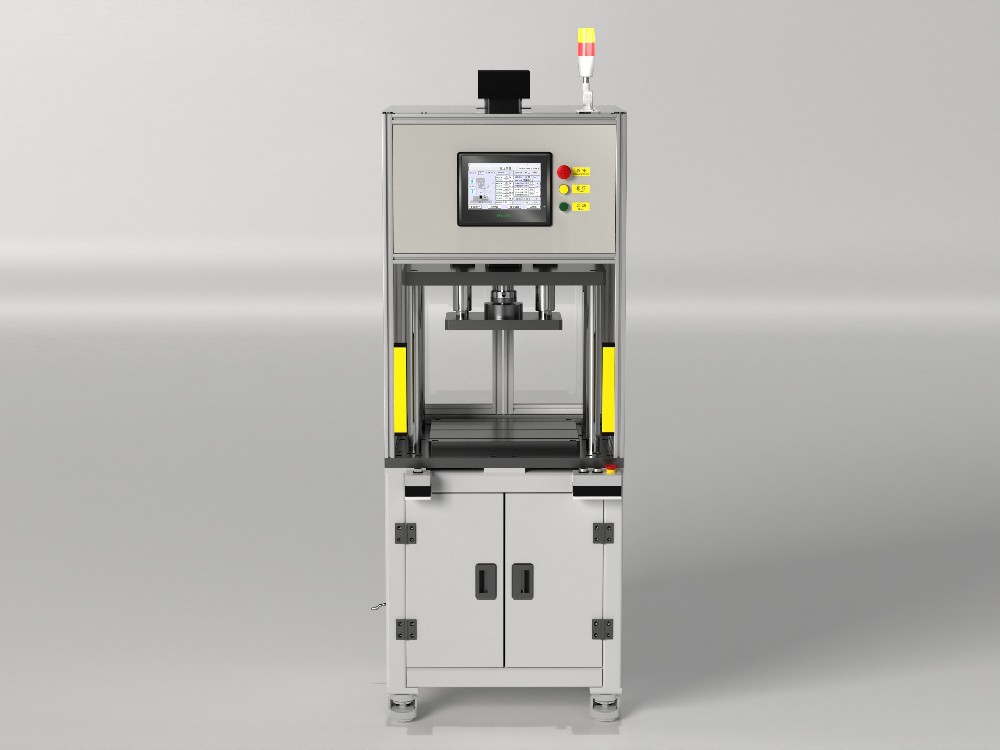 ↗
A four-column guided platform for press fitting, forming and fixture integration.
 ↗
Open access for loading and tooling adjustments in stand-alone assembly stations.
 ↗
A four-column, three-platen structure with force/position feedback, PID heating and non-stick tooling for multi-point plastic heat staking and bonding.
Tell us about your part, process and cycle requirements. Start with an engineering conversation.